
Helping industry leaders like these get more from their batteries.



Hidden degradation quietly erodes capacity, revenue and residual value.
Every battery ages. Usage, temperature, calendar ageing and system integration all drive it, and the BMS alone can't show you the full picture. ACCURE's battery state-of-health analytics forecast degradation over a two-year horizon, so you can defer and right-size CapEx, substantiate warranty claims against the OEM, and defend residual value with confidence.
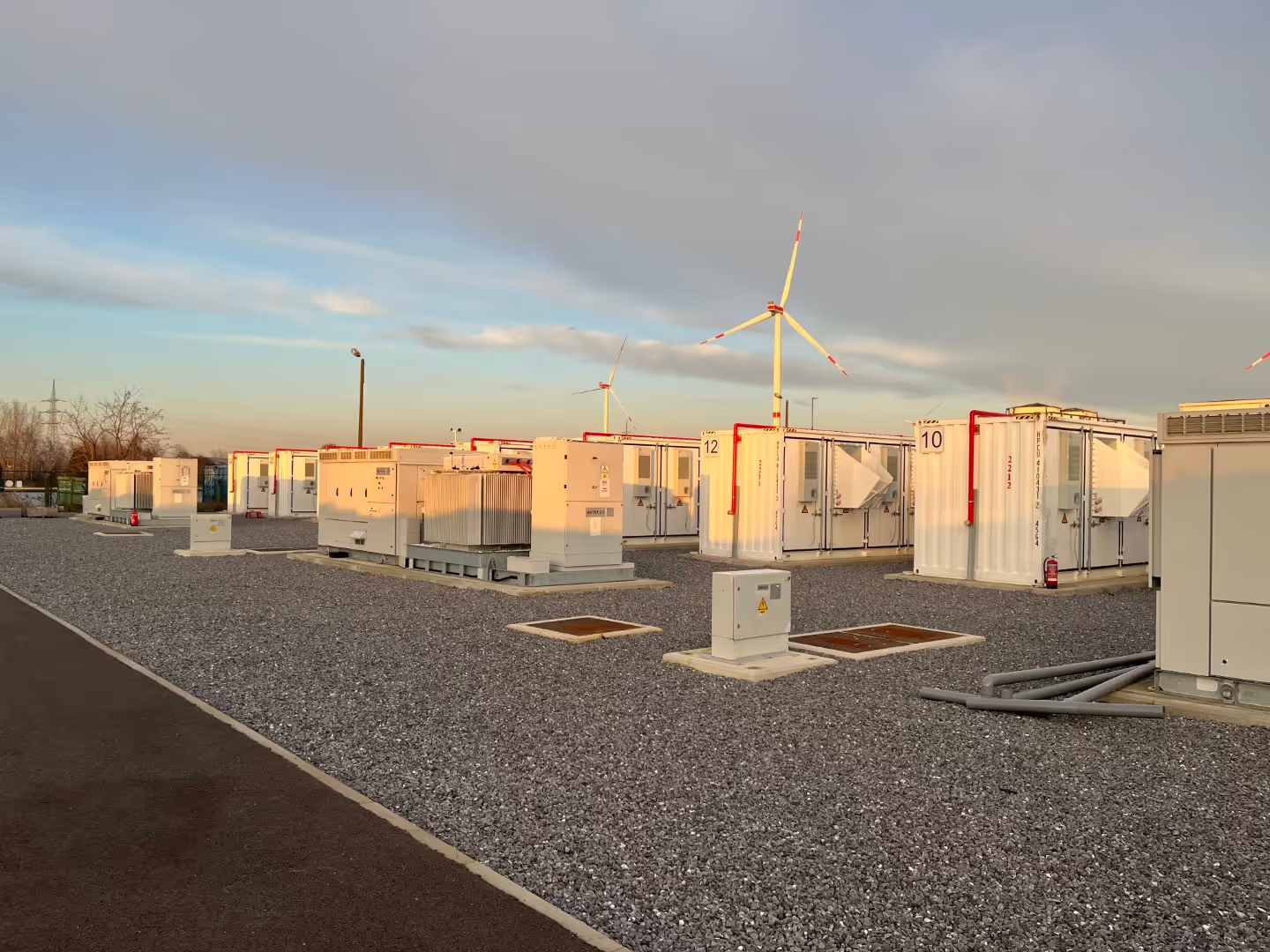
Plan augmentation and CapEx with confidence.


FAQs
ACCURE's battery health (Lifetime) analytics detect and diagnose degradation across grid-scale BESS, forecasting state of health and identifying the usage, thermal and system factors driving it.
It lets owners and operators defer and right-size augmentation CapEx, avoid over-building, and defend residual value, and provides the evidence to substantiate warranty claims when a battery ages faster than contracted.
Yes. ACCURE is independent and OEM-agnostic, working across chemistries and manufacturers.
An annual capacity test captures what an asset can deliver during a single test day. The result is heavily influenced by significant uncertainties like preconditioning, test profiles, temperature and cell or rack imbalances. The test rarely represents how the asset behaves in the field. ACCURE reads your live operational data continuously, so state of health reflects real-world use rather than test-day conditions, and it forecasts how capacity will develop rather than capturing only today's figure.
Cycling and usage patterns, temperature, calendar ageing and system integration all contribute, and their combined effect is often invisible in BMS data alone.