Conrad Energy: The 15% gap - what your battery isn't telling you
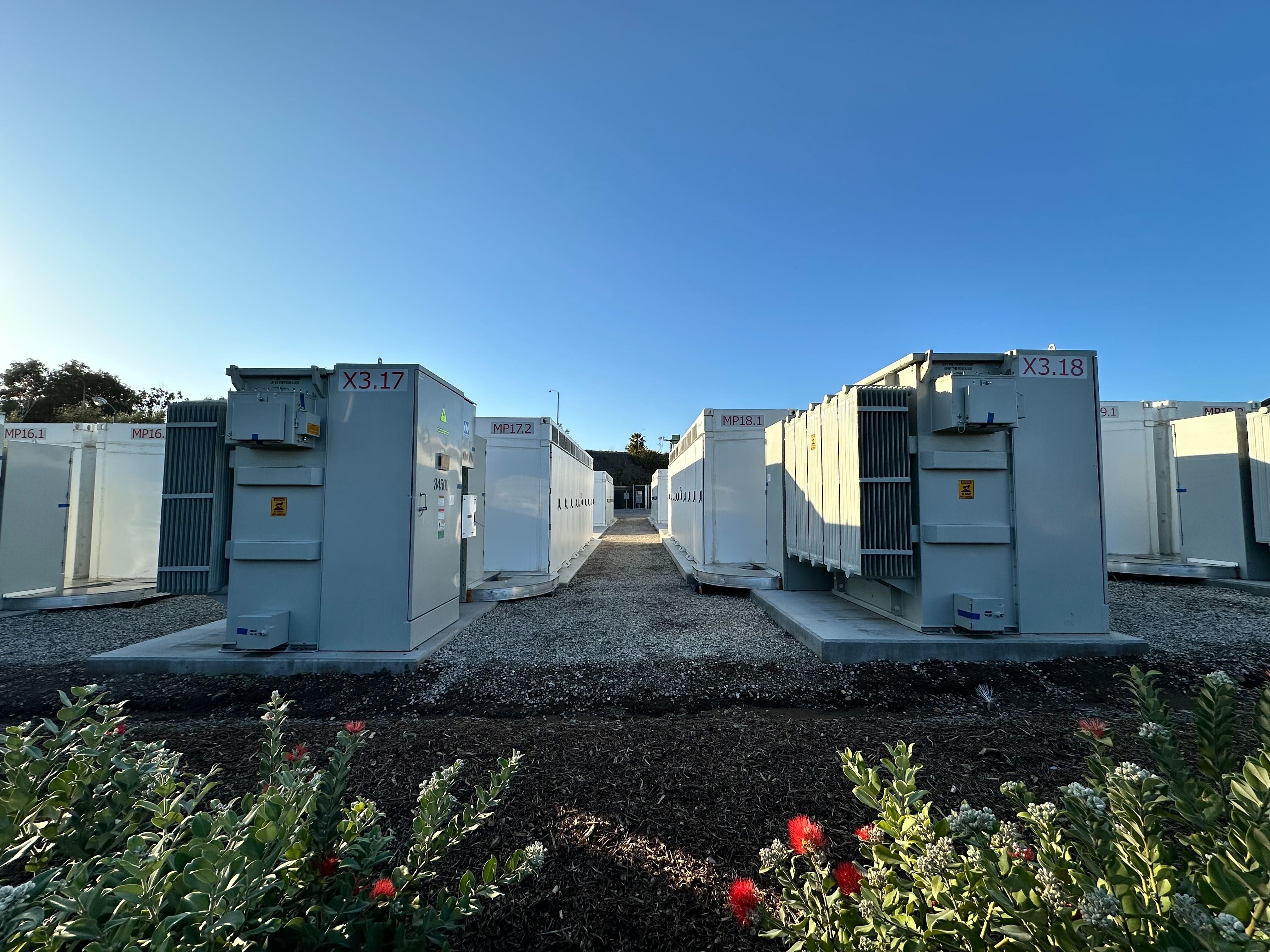
Conrad Energy has improved trading outcomes across its battery energy storage sites through a small but significant data change that gives it a more accurate understanding of the usable energy on site. Using its iON+ software platform for dispatch and control, Conrad Energy incorporated corrected State of Energy (SoE) values fromACCURE Battery Intelligence into live operations, giving traders the tools and confidence to improve returns from existing assets.
The challenge: imperfect data leaves money on the table
One of the fundamental metrics in BESS trading is also one of the hardest to pin down precisely: SoE, the energy a battery can deliver at any given moment. Every dispatch decision a trader makes depends on knowing this number.
The problem is that SoE is calculated from the battery’s State of Charge (SoC), which is not an absolute number that can be easily quantified; it must be inferred using a variety of methods that can deviate to ±15% of the battery’s true state.
Think of your phone battery showing 3% left, then suddenly turning off without warning. The phone’s software is estimating, not directly measuring, the battery’s SoE. The estimate works fine most of the time, but it occasionally drifts away from the true state due to conditions such as heavy usage, temperature changes, or ageing cells.
The same is true in BESS operations, only there’s a lot more money on the line. An SoE estimate that's off in either direction is a problem. Overstate what's really there, and a trader risks promising more energy than the battery can deliver. Understate it, and the trader plays it safe, stopping short of what the market, and the asset, could actually have supported.
The solution: the right data, systems and automation
To close this gap, ACCURE applies advanced analytics and physics-based models to calculate a much more accurate SoE reading. This is normally achieved by analysing data from the Battery Management System (BMS) directly. While this data is sufficient to manage day-to-day operations of a site, it can lack the granularity and control required to get the best results out of the analytics models. With the right data inputs, ACCURE can continuously improve the accuracy of the SoE estimation to within ±2% of the battery’s true state, without the need for recalibration cycles.
To achieve this level of accuracy, and the benefits that come with it, Conrad Energy installed the iON+ data gateway on its BESS sites. The gateway captures a greater range of signals, at a higher frequency, and at lower latency than a typical BMS provides. iON+ extracts the data, processes it, and feeds it to ACCURE, thereby creating a much richer and more useful dataset for analysis. The corrected SoE is then fed back into iON+ for traders to incorporate into optimisation algorithms and monitor performance.
So what did this all mean in practice?
Once the corrected values were running across the trial sites, the first question was: How far apart were the BMS-estimated SoE and ACCURE’s corrected SoE readings?
The answer, on average, was a gap of 15% between the two. That's a significant discrepancy, and the consequence depends on whether the correction shows more or less energy than the BMS.
When the correction reveals more energy: revenue creation
If a battery's true usable energy turns out to be higher than the BMS assumed, that difference is pure upside - tradeable MWh that would otherwise go unsold.
To estimate the financial impact of a 15% increase in usable energy, Conrad Energy built forecasts against market-wide revenue benchmarks. Using Modo Energy's BESS GBIndex, the analysis indicates it could translate into approximately £1.1million/GW/yr of additional revenue for a 1-hour asset, or £6.6 million/GW/yr for a 2-hour asset.
*Based on the trailing 12-month average of the Modo Energy BESS GB Index across all GB regions. Includes wholesale trades, balancing mechanism and imbalance. Excludes frequency response, reserve and capacity market revenues, which are minimally affected by SoE accuracy.
When the correction reveals less energy: reduced risk
The other direction is just as important: if a battery has less usable energy than the BMS assumes, a trader working off the BMS figure risks selling more energy than the asset can deliver.
Take, for example, the system squeeze that occurred in the UK on 23rd June 2026. Tight margins from low wind and high demand caused the System Imbalance Price (SIP) to rise sharply to £800/MWh, more than five times the level it was at just hours before.
Picture a 100MWh site with a 15MWh BMS inaccuracy on that day. The BMS says the site can deliver 40MWh in the half-hour ahead, so the desk sells it at what looks like an attractive £450/MWh. But the real deliverable volume is only 25MWh, not 40MWh. The site is now in an imbalance position and must buy the missing energy back at the day's £800/MWh peak. At a £350/MWh spread between where the position was sold and where it had to be closed out, that single half-hour costs £5,250.
Extend thiscommon scenario across dozens of assets and hundreds of trading decisions eachyear, and the financial impact quickly adds up.
A smarter way to improve performance
In the world of BESS, operators like Conrad Energy are constantly looking for improvements that will give them an edge in these highly competitive markets. This trial with ACCURE has shown that interventions like module replacements, rebalancing campaigns or inverter upgrades, all of which involve downtime and significant capital investment, aren’t the only ways to improve performance and availability.
Instead, by combining better data with intelligent, well-integrated tools, Conrad Energy has improved outcomes twofold, creating revenue in one direction, and protecting against penalties in another.
Following the success of this trial, Conrad Energy is now looking to roll this approach out across its wider battery portfolio, using iON+ to transform the new insight into live, automated decision-making, and to maximise performance across the fleet.
About iON+
iON+ is the SaaS platform built by the energy industry, for the energy industry. Already trusted by operators of almost 1GW of generation and storage, it gives you the tools to operate, report, and grow with confidence.
iON+ has been developed by Conrad Energy, it consists of four modules: iON+Operate, iON+ Dispatch, iON+ Optimise and iON+ Analyse. The software helps combine data, systems and people to help you run your energy assets more efficiently and effectively. From BESS to solar, flexible generation to wind,the platform delivers better cost-efficiency, control, commerciality, and clarity across your entire portfolio.
Conrad Energy is one of the leading independent power producers in the UK, generating, buying and selling energy to the grid and business customers.
For more information visit: https://ion.tech/